

Written by Norman Brackett
Reviewed by Stephen E. Berken
Being served with a credit card lawsuit can feel overwhelming, especially when the papers include unfamiliar legal terms and a court date. The most important first step is not to panic—and not to ignore the case. A lawsuit does not automatically mean the creditor has proven its claim, but missing the response deadline can allow the creditor to request a default judgment.
At Berken Cloyes, we help people throughout Denver and across Colorado evaluate debt lawsuits, collection pressure, and bankruptcy options. Stephen E. Berken and our team look at the lawsuit alongside the rest of the client’s financial picture, because the right response depends on the documents, the debt, available defenses, and the person’s broader goals.
Start With the Summons and Complaint
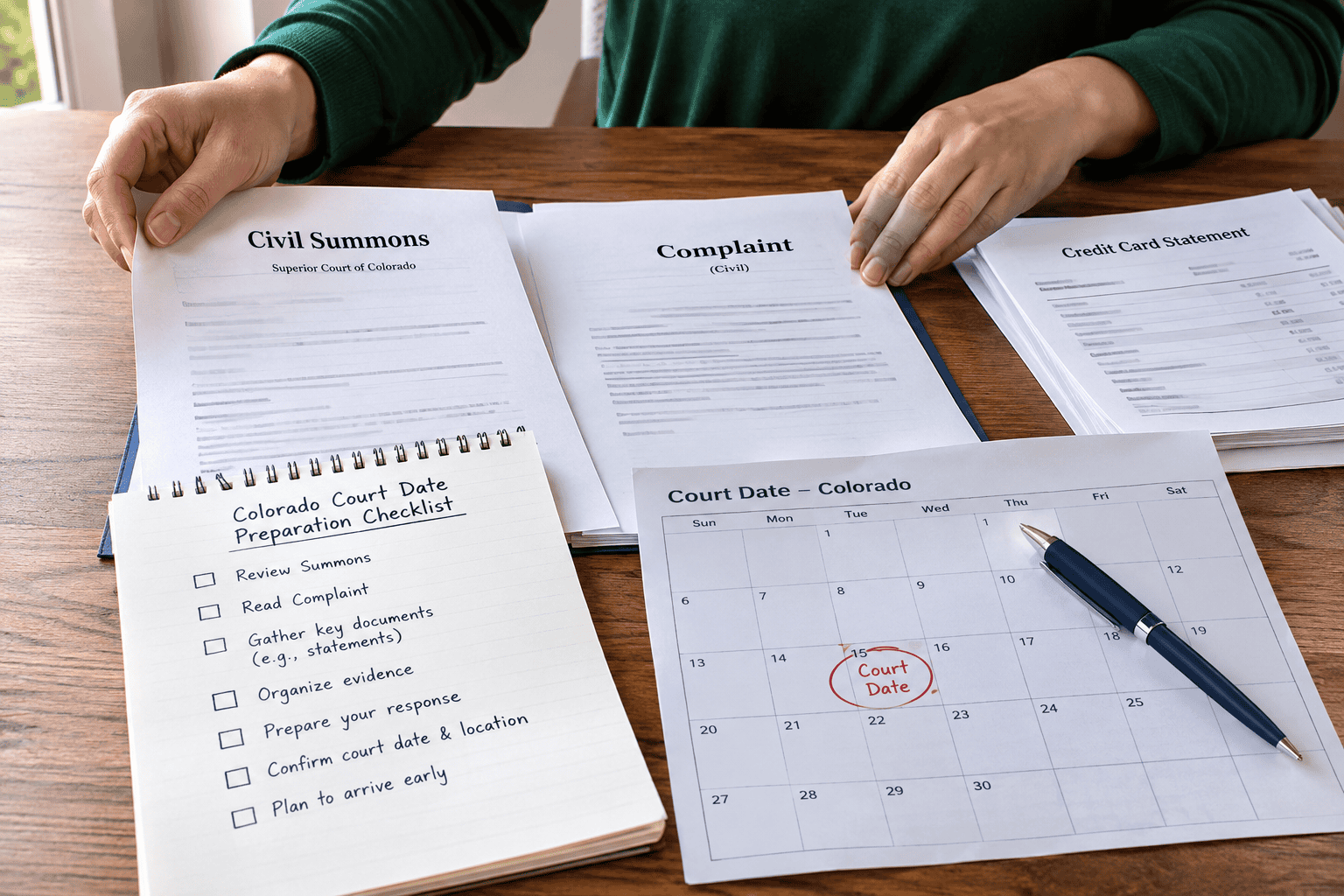
The summons tells you where the case was filed and when action is required. The complaint explains who is suing, how much the plaintiff claims is owed, and the basic allegations supporting the claim. Colorado county court money cases generally require a defendant to file a response on or before the return date stated in the summons. District court procedures and deadlines can differ, so rely on the papers served in your specific case rather than a deadline found in a general online article.
Ignoring the lawsuit may lead to a default judgment. Once a judgment is entered, the creditor may have additional collection tools, potentially including bank levies or wage garnishment. If a judgment or garnishment is already involved, our information about wage garnishment options in Colorado explains why prompt review matters.
What to Do Before the Court Date
Use the time before the response deadline to organize the facts. A useful starting checklist includes:
- Read every page of the summons and complaint.
- Write down the case number, court, return date, and plaintiff’s attorney.
- Gather account statements, payment records, collection letters, and prior settlement communications.
- Confirm whether the plaintiff is the original card issuer or a debt buyer.
- Compare the amount claimed with your own records.
- Do not sign a settlement or payment agreement you do not understand.
- Speak with an attorney early enough to evaluate the available options.
Keep the envelope and note how and when you received the paperwork. Service issues can sometimes matter, but a person should not assume that a perceived problem with service makes the lawsuit disappear. Court deadlines should be treated seriously unless the court says otherwise.
Questions That May Matter in a Credit Card Case
A meaningful review is more than asking whether the card was used. The plaintiff must pursue the claim through the court process and support the amount requested. Depending on the facts, an attorney may examine:
- Whether the plaintiff can document ownership of the account.
- Whether the balance, interest, fees, and credits are accurate.
- Whether the claim was filed within the applicable limitations period.
- Whether payments, credits, identity theft, or another dispute affects the balance.
- Whether collection communications complied with applicable consumer-protection law.
Colorado law generally provides a six-year limitations period for actions to recover certain liquidated debts, but determining when a claim accrued and whether later events affected the analysis can be fact-specific. Do not make a payment or acknowledgment solely to “buy time” without understanding how it could affect your position.
Should You Settle, Defend the Case, or Consider Bankruptcy?
There is no single answer for every credit card lawsuit. If the debt and documentation are accurate, negotiation may be possible. If the amount or ownership is disputed, defending the case may be appropriate. When the lawsuit is one of several unmanageable debts, a broader debt relief evaluation may reveal options that address more than one creditor at a time.
Bankruptcy may stop most collection lawsuits through the automatic stay once a case is properly filed, but filing is a significant decision that should account for income, property, other debts, pending garnishments, and long-term goals. Stephen E. Berken can review whether Chapter 7, Chapter 13, settlement, or another strategy fits the circumstances. Filing an answer in the lawsuit may still be necessary unless and until a bankruptcy case or court order changes the situation.
Avoid These Common Mistakes
- Waiting until the return date to seek help.
- Assuming a phone call to the collector counts as a court response.
- Sending money before confirming who owns the debt and what the agreement requires.
- Discarding statements or collection letters that may help explain the account history.
- Failing to tell an attorney about other lawsuits, garnishments, tax debts, or secured debts.
Get Help With a Credit Card Lawsuit in Denver
A court case is easier to evaluate when there is still time to act. Berken Cloyes has spent decades helping Colorado consumers address credit card debt, collection lawsuits, garnishments, and bankruptcy. We will review the immediate court problem and the larger financial situation so you can make an informed decision.
Call our Denver office at (303) 623-4357 or request a free, no-obligation case review. Bring the summons, complaint, and any account records you have so our attorneys can assess the next steps before your deadline.
